



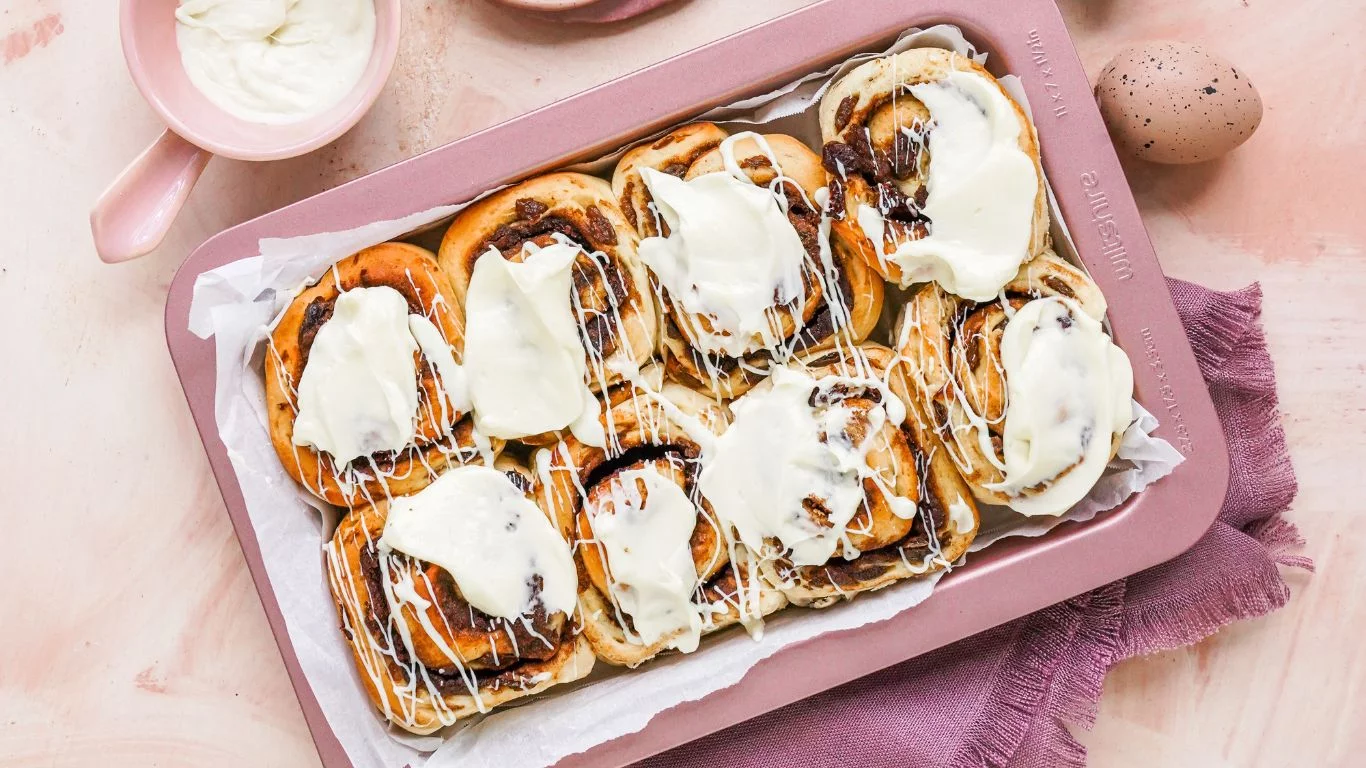
Cinnamon Scrolls
Preparation 25 Minutes
Cook 1.5 hours Minutes
Serves 9
Method
Transfer warm milk to the bowl of an electric mixer and sprinkle yeast on top. Add in sugar, egg, egg yolk and melted butter. Mix until well combined.
Stir in flour, salt, currants and sultanas until a dough begins to form.
Place dough hook on stand mixer and knead dough on medium speed for 8 minutes. Dough should form into a nice ball.
Transfer dough ball into an oiled bowl and cover with cling film. Allow dough to rise for approximately an hour, or until doubled in size.
After dough has doubled in size, transfer dough to a well-floured surface and roll out into a 35x22cm rectangle. Spread softened butter over dough.
In a small bowl, mix brown sugar and cinnamon. Use your hands to sprinkle mixture over the buttered dough followed by the currants, then press into the butter.
Tightly roll dough up, starting from the shorter side and place seam-side down making sure to seal the edges of the dough as best you can.
Cut into 1 inch sections with a serrated knife. You should get 9 large pieces.
Place cinnamon scrolls in a greased 23x23cm baking pan or round 23cm cake pan. Cover with plastic wrap and a warm towel and let rise again for 30-45 minutes.
Preheat oven to 175 degrees Celsius. Remove clingwrap and bake for 20-25 minutes or until just slightly golden brown on the edges. Allow to cool for 5-10 minutes before frosting.
Makes 9 cinnamon scrolls.
To make the frosting:
In the bowl using electric mixer, combine cream cheese, butter, powdered sugar and vanilla extract. Beat until smooth, light and fluffy.
Ingredients
For the dough:
185ml warm milk
7g of instant yeast
50g of white sugar
1 egg plus 1 egg yolk, at room temperature
55g salted butter, melted
400g bread flour, plus more for dusting
3/4 tsp salt
100g Sunbeam Australian Currants
100g Sunbeam Australia Sultanas
For the filling:
135g dark brown sugar
2 tbsp ground cinnamon
60g butter, softened
100g Sunbeam Australia Currants
For the cream cheese frosting:
150g cream cheese
150g butter, softened
150g powdered sugar
½ tsp vanilla extract
Recipe Collection

Lemon Friands
- Pre-heat oven to 180°C (160°C fan-forced). Grease with some butter and dust with additional almond meal 12 x ⅓ cup capacity friand moulds.
- Combine icing sugar, almond meal and flour in a large mixing bowl.
- In a separate bowl, whisk the egg whites until frothy. Stir in the butter and juice. Add to the icing sugar mixture and mix until well combined.
- Pour between prepared moulds and bake for 20 minutes. Allow to cool for 5 minutes before removing from pan and cool completely on a cooling rack. Serve dusted with additional icing sugar.
Cauliflower & Currants Salad
1. Preheat oven to 220ºC (200ºC fan forced). Line a baking tray with non stick baking paper.
2. Place cauliflower onto prepared tray; drizzle over olive oil and season to taste with salt and pepper. Roast for 20-25 minutes or until just tender and golden.
3. Spread hummus onto a serving plate; top with cauliflower; drizzle with glaze. To finish, sprinkle with currants and parsley. Serve.
Roasted Cauliflower Soup
- Cut cauliflower roughly into pieces, toss with half the oil and cumin. Season well. Spread onto a lined oven tray and roast at 180°C for 25 minutes or until tender.
- Heat remaining oil in a large pot. Add onion and garlic, cooking until onion is tender. Add roasted cauliflower pieces, potatoes and the stock. Bring to the boil, reduce heat and simmer for 20 minutes.
- When potatoes are tender, puree soup with a food processor or handheld blender, until smooth and creamy. Return to heat until required.
- For walnut crumb, heat oil in a frying pan and toast breadcrumbs and walnuts until golden and crisp. Allow to cool slightly, then stir in parsley and currants. Season well. Serve hot soup with a scattering of crumbs.
Date Cookies
- Pre-heat oven to 170°C (150°C fan-forced). Line oven trays with baking paper. Place oats, flour, dates and pepitas in the bowl of a food processor and pulse until coarsely chopped. Remove to a mixing bowl.
- Place butter and honey in a small saucepan and heat until melted. Add to oat mixture with the banana and mix well. Spoon tablespoons of mixture onto prepared trays. Bake for 20 minutes or until just golden. Remove to a cooling rack to cool completely.
Layered Caramel Cake with Christmas Fruit Cream
Step 1: In a medium bowl soak Sunbeam fruit with orange rind, maple syrup & boiling water for 2 hours.
Step 2: Caramel Ganache. In a small saucepan on medium heat, melt the caramilk chocolate and 400ml of cream to form a ganache. Once melted and well combined, stir and set aside to cool. Once the caramilk ganache has cooled, whip with a hand blender till firm.
Step 3: Fruit Cream. Remove orange rind and drain fruit of any excess liquid. Set liquid aside as you will use this later. In a large bowl whip 400ml cream, corn flour and All Spice until firm. Add fruit mix to cream and stir through.
Step 4: Assemble. Cut your sponge cake into halves so you have 4 pieces to form 4 layers. On each layer of the cake spread 2-3 tablespoons of the caramilk ganache followed by 2-3 tablespoons of the fruit cream mix – spread evenly and layer your cake.
Garnish with any leftover ganache and cream and top with seasonal fresh fruits.
Apple, Pear & Sunmuscat Filo Tart
Preheat oven to 200ºC (fan forced 180ºC). Line a baking tray with baking paper.
Combine all nuts, sunmuscats, breadcrumbs and cinnamon, toss to combine then drizzle over the maple syrup and mix well. Reserve 1/3 cup of this mixture.
Lay 1 sheet of filo onto prepared tray. Brush evenly with melted butter, sprinkle over ¼ of the nut mixture. Brush a second sheet with butter and arrange on top, repeat with another ¼ of the nut mixture. Repeat twice more, so you have 4 layers of brushed filo and nut mixture, then brush remaining filo sheet with butter and place on top.
Arrange apple and pear slices on top, brush with remaining butter then sprinkle over reserved nut mixture and coconut sugar.
Bake for 25-30 mins until pastry is golden. Cut into slices and serve with rocket.