



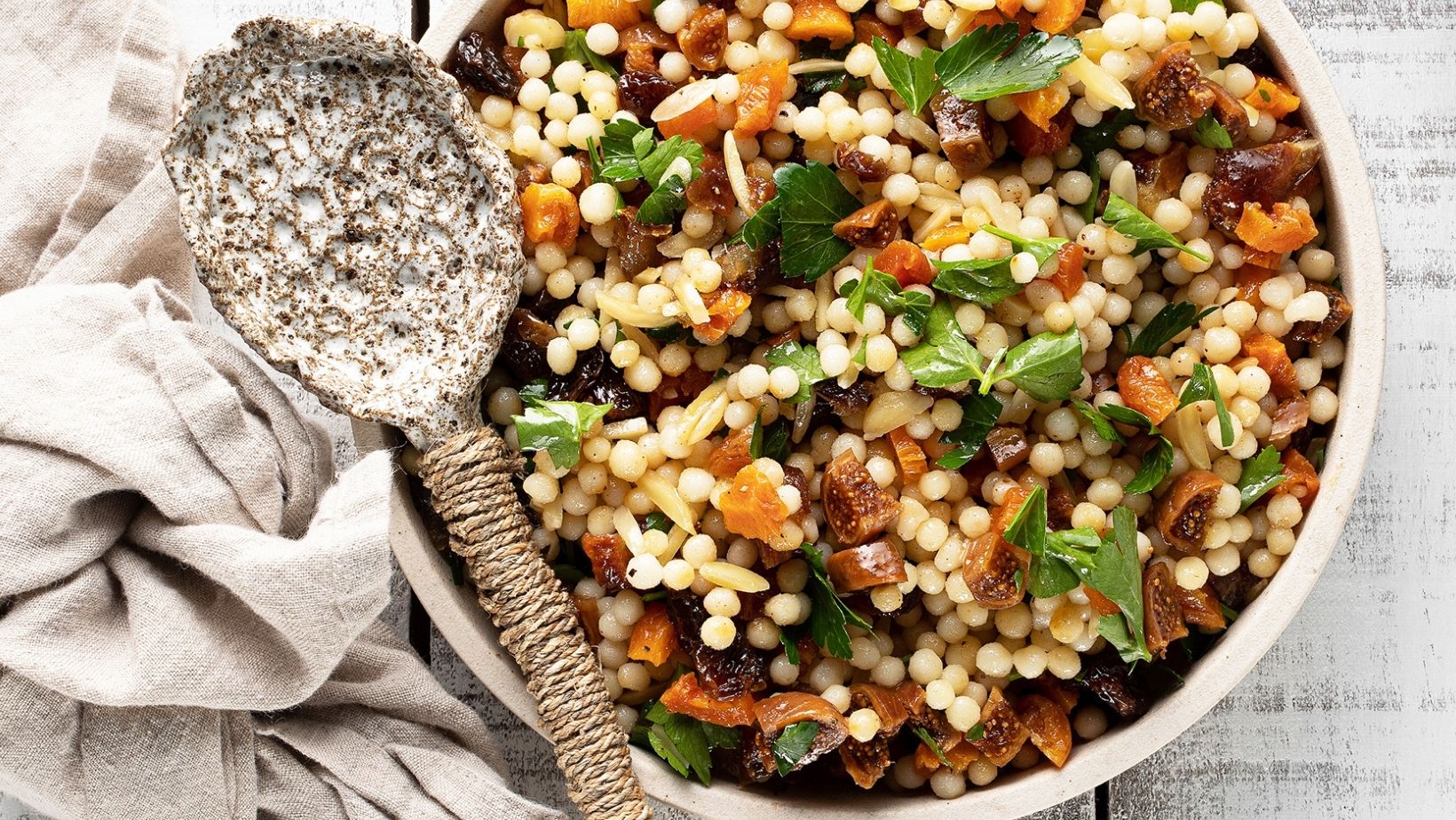
Couscous Dried Fruit Salad
Preparation 10 Minutes
Cook 15 Minutes
Serves 8 – 10 as a side
Method
Rinse the couscous under cold, running water. Add to a saucepan with 750ml water, bring to a boil then reduce heat to low, cover and cook for 15 mins or until soft. Drain and rinse under running water and set aside to cool completely.
Whisk together olive oil and lemon juice, season and pour over the cooled couscous. Toss to coat.
Add remaining ingredients and mix well. Spoon into a presentation bowl to serve.
This salad can be served cold or at room temperature.
Moghrabieh can be substituted for Israeli (pearl) couscous. Simply follow the cooking instructions on the packet as they can vary.
Ingredients
360g uncooked moghrabieh (Lebanese couscous)*
60ml olive oil
Juice of ½ lemon
135g pitted Angas Park Medjool Dates, chopped
100g Sunbeam Raisins
120g Angas Park Dried Apricots, chopped
130g Angas Park Dried Figs, chopped
60g Sunbeam Slivered Almonds, toasted
½ small bunch flat leaf parsley, roughly chopped
Sea salt and freshly cracked black pepper
Recipe Collection

Easy Florentines
Preheat oven to 180ºC (160ºC fan).Line 2 baking trays with baking paper.
In a large bowl, combine Corn Flakes, almonds, sultanas and cherries, mix well.Pour over the sweetened condensed milk and stir to coat.
Place an egg ring onto prepared pan.Spoon the mixture into the egg ring, filling to the top and gently pressing down to compact.Remove egg ring and repeat, with remaining mixture, 6 biscuits on each tray.
Bake biscuits for 15 mins, swapping the trays around half way.Remove from oven and allow biscuits to cool completely on trays.
Melt the chocolate and brush onto the bases of each biscuit.Rest cookies on a baking rack, chocolate side up, to allow chocolate to set.
You will need a 7.5cm egg ring for this recipe
Fruit Mix Ice-cream Bombs
Remove Ice-cream from the freezer & stand in the fridge for 20 min to soften; do not melt completely.
Line 6 x 180ml dariole moulds or similar with plastic wrap. Put the fruit mince, sherry and almonds in a large mixing bowl, add the softened ice-cream & gently stir to combine.
Spoon the ice-cream mix into each pre-pared mould.
Return moulds to the freezer & freeze for 5 hours or till firm.
Put the sugar & egg whites in small bowl, beat until soft peaks form. Approx 10 min
Turn out the ice-cream moulds, invert onto tray,
Spoon or pipe meringue onto each ice-cream mould.
Blow torch to brown meringue or bake at 220C for 5 min
Orange & Olive Oil Almond Cakes (Gluten Free)
- Pre-heat oven to 180°C (160°C fan-forced). Line 12 x ⅓ cup capacity muffin moulds with paper cases.
- Combine flour, almond meal, sugar and baking powder in a large mixing bowl.
- In a separate bowl, whisk together the oil, milk, eggs and orange rind until well combined. Add to flour mixture and mix until smooth. Pour between paper cases and sprinkle with flaked almonds. Bake for 20 minutes.Tip:
For those avoiding dairy, simply substitute the cows milk with your milk of choice.
Apple, Pear & Sunmuscat Filo Tart
Preheat oven to 200ºC (fan forced 180ºC). Line a baking tray with baking paper.
Combine all nuts, sunmuscats, breadcrumbs and cinnamon, toss to combine then drizzle over the maple syrup and mix well. Reserve 1/3 cup of this mixture.
Lay 1 sheet of filo onto prepared tray. Brush evenly with melted butter, sprinkle over ¼ of the nut mixture. Brush a second sheet with butter and arrange on top, repeat with another ¼ of the nut mixture. Repeat twice more, so you have 4 layers of brushed filo and nut mixture, then brush remaining filo sheet with butter and place on top.
Arrange apple and pear slices on top, brush with remaining butter then sprinkle over reserved nut mixture and coconut sugar.
Bake for 25-30 mins until pastry is golden. Cut into slices and serve with rocket.
Christmas Cookies
Preheat oven to 170°C
Beat butter, essence and sugars in small bowl with electric mixer until light and fluffy, beat in egg. Stir in flours, chocolate bits, nuts, dried fruits & milk.
Drop heaped tablespoons of mixture onto lightly greased oven trays, about 3cm apart.
Bake in moderate oven about 12 minutes or until firm and lightly browned. Stand on trays 5 minutes before lifting onto wire racks to cool.

Banana & Walnut Muffins
Preheat the oven to 180°C (160°C fan-forced). Line muffin tin with baking paper muffin wrappers.
Beat butter and sugar in a small bowl until light and fluffy. Beat in eggs, one at a time, until combined. Transfer mixture to a large bowl; using a wooden spoon, stir in sifted dry ingredients, banana, nuts and milk. Spread mixture evenly into the muffin pan.
Bake for 15 – 20 minutes. Check at 15 min with a skewer and cook until the skewer comes out clean.
Cool on a wire rack.