



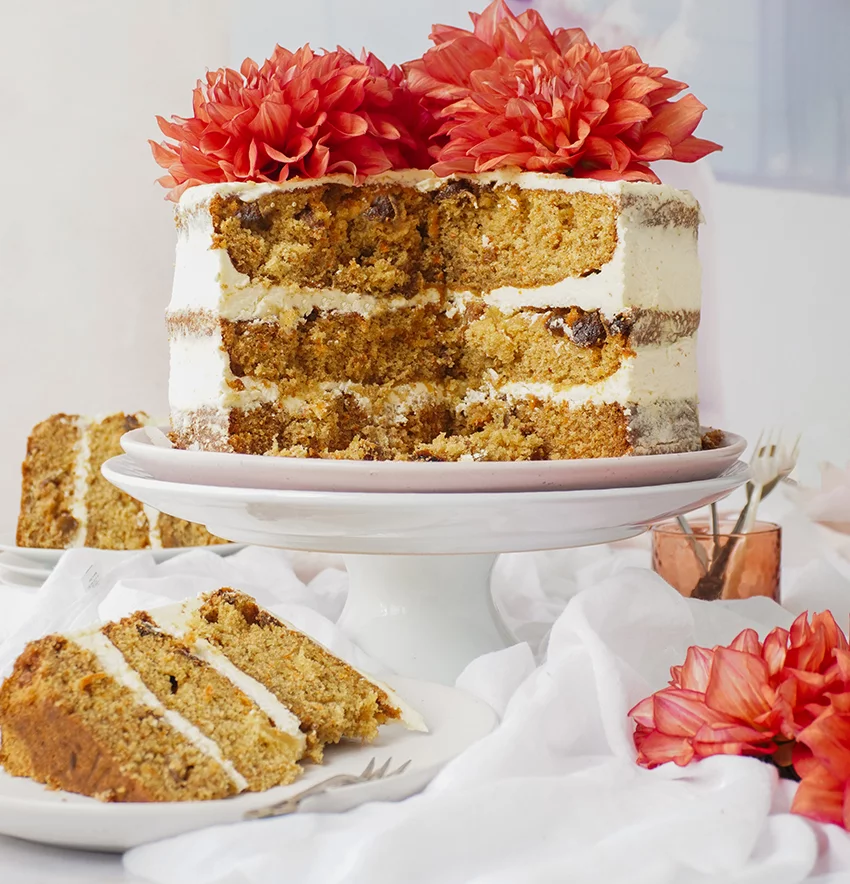
Carrot & Sultana Cake
Preparation 10 Minutes
Cook 40 Minutes
Serves 8
Method
Preheat oven to 180C. Grease and line two 20cm cake tins.
In a large bowl, sift the flour, baking powder, bicarb, spices and salt. Stir to combine.
In a stand mixer, beat the eggs, sugars, oil and vanilla until smooth. Add half of the flour mix and mix on low speed until combined. Add remaining flour mix and mix on low speed again until all of the flour is incorporated. Add the pineapple and sultanas. Stir with a wooden spoon to combine.
Divide evenly between the prepared tins and bake for 40 mins or until cooked. Rotate the cakes after 20 mins. (You can test with a skewer, and the cake is ready when the skewer comes out clean.)
Cool the cakes in the pans for 10 mins, then transfer to cooling racks and leave until cooled.
Meanwhile, prepare the icing.
In a stand mixer, beat the butter on medium speed until very pale and creamy, about 4 mins. Add half of the sifted icing sugar and beat on low speed for about 1 min. Increase speed to medium to combine. Add remaining icing sugar and reduce speed to low for a further minute, then increase to medium speed for another few minutes until all of the icing sugar is combined. Add the vanilla and 1 tablespoon of the milk. Beat for 1 minute or until combined. Add extra tablespoon of milk of you would like a thinner frosting.
Divide the frosting between the centre of the cakes, reserving the remainder for the top and the sides.
Decorate with topping of choice.
Ingredients
2 ½ cups plain flour
2 tsp baking powder
1 tsp bicarb soda
2 tsp ground cinnamon
½ tsp nutmeg
½ tsp ground ginger
½ tsp salt
4 large eggs
1 ¼ cup brown sugar
¾ cup caster sugar
1 ¼ cup vegetable oil
1 tsp vanilla extract
3 cups shredded carrot
¾ cup tinned pineapple chunks, drained
1 cup Sunbeam sultanas
Icing
250g unsalted butter, softened
5 cups icing sugar, sifted
2 tsp vanilla extract
2 tablespoons milk
Recipe Collection

Walnut Cheese Log
Cheese to room temp.
In a bowl, mix cheese & alcohol in a processor with salt and pepper until smooth.
Mix chilli with herbs and nuts, then sprinkle on a 30cm piece of plastic wrap, leaving a 2cm border.
Spoon cheese along one end of herbs. Lift wrap and roll cheese away from you into a log, pressing gently to coat well in herbs, shape the mixture into a log, then wrap and refrigerate for about an hour, until the mixture is firm.
Serve with crackers
Christmas Bomb Alaska
Make a small approx 13cm base from Sunbeam fruit cake and set aside. (Match the base diameter to your mould base size)
Remove Ice-cream from the freezer & stand in the fridge for 20 min to soften; do not melt completely.
Line a tall dariole mould or similar with plastic wrap
Put the fruit mince in a large mixing bowl, add the softened ice-cream & gently stir to combine.
Return mould to the freezer & freeze for 5 hours or till firm.
Beat egg whites and sugar until stiff peaks form.
Remove ice cream from mould, add ice cream to cake base and coat with meringue mix. Use a blow torch to toast. Serve Immediately.
Baked Spiced Cauliflower Salad
- Pre-heat oven to 180°C (160°C fan-forced). Trim cauliflower, cut into florets and place in a large mixing bowl.
- Combine seeds and spices with the oil and pour over cauliflower. Mix well with your hands to ensure even coating. Tip into a single layer on a baking tray and cook for 20 minutes or until golden and tender. Set aside to cool.
- Whisk together the oil, vinegar and maple. Place cauliflower onto a serving platter and toss gently with the spinach leaves. Sprinkle with feta and pomegranate seeds. Drizzle with dressing and serve.
Carrot & Walnut Cake Cupcakes
Preheat oven to 180 degrees Celsius
Whisk together your plain flour, baking soda, salt and cinnamon
In a separate bowl, mix your wet ingredients, milk, white vinegar, vegetable oil, eggs and brown sugar
Once your wet ingredients are well combined, stir in your carrots, shredded coconut, pineapple, walnuts and raisins.
Pour your wet ingredients into your dry ingredients and mix until just combined. Do not over mix.
Fill your muffin tins with your patty pans and then with a spoon or a lever ice cream scoop, fill them to the top.
Bake in the oven for approximately 20 minutes or until a skewer comes out clean.
Let cool completely before decorating with meringue.
Once your muffins are cool you can start on your meringue. Mix your egg whites and caster sugar together in a bowl over a pot of water on the stove. Once the heat from the pot has dissolved the sugar in your egg whites, put your bowl on your electric mixer and whisk until stiff peaks.
Using a piping bag or a large ziplock bag with the corner cut off, pipe the top of your muffins in any shape you like. If you have a blow torch, give them some colour, or leave them natural and decorate with your favourite easter eggs.
Chocolate Raisin Pudding
Pre-heat oven to 190°C (170°C fan-forced).
- Roughly chop raisins and place in a small saucepan with port. Bring to a boil, remove from heat and set aside to cool.
- Place chocolate and butter in a bowl over simmering water, stirring often until melted and smooth. Cool slightly.
- Beat together the eggs, yolks and sugar until pale and increased in volume. Add chocolate mixture, mixing until well combined. Fold in flour with the raisins and mix well.
- Spoon mixture between 6 x 250 ml capacity oven proof serving dishes. Place onto an oven tray and bake for 10-12 minutes until just cooked. Allow to sit for 3-4 minutes before serving with cream or ice-cream.
Orange & Olive Oil Almond Cakes (Gluten Free)
- Pre-heat oven to 180°C (160°C fan-forced). Line 12 x ⅓ cup capacity muffin moulds with paper cases.
- Combine flour, almond meal, sugar and baking powder in a large mixing bowl.
- In a separate bowl, whisk together the oil, milk, eggs and orange rind until well combined. Add to flour mixture and mix until smooth. Pour between paper cases and sprinkle with flaked almonds. Bake for 20 minutes.Tip:
For those avoiding dairy, simply substitute the cows milk with your milk of choice.