



Christmas Cheesecake
Preparation 20 Minutes
Cook 2 hours Minutes
Serves 16
Method
Preheat oven to 180oC (160oC fan). Generously grease a 20cm round, loose-bottom (or springform) tin. Line the base with baking paper.
In the bowl of a food processor, add biscuits. Blitz to a fine crumb. Add 250g of the melted butter and blitz until just combined. Spoon the mixture into the prepared tin and use a spatula to gentle push half of the mixture up the sides of the tin. Spread remaining mixture evenly over the base (using a drinking glass can help to compact the mixture around the sides and base). Refrigerate.
In the bowl of a stand mixer fitted with a whisk attachment, combine remaining butter with sugar and whisk until combined. With the motor running, add eggs one at a time until incorporated. Scrape down the sides of the bowl and add cream cheese, quark, sour cream and vanilla, whisk until smooth. Add cornflour and mix until incorporated.
Add peel and sultanas and gently fold through the cream mixture, then spoon into the prepared base and smooth the surface.
Bake cheesecake for 10mins then reduce oven temperature to 170°C (150°C fan) and bake for a further 50 mins. Turn off the oven, leaving the door slightly open, allow cheesecake to sit in the oven for a further hour until the edges of the cheesecake feel firm when gently pressed.
Allow the cheesecake to cool completely at room temperature then remove sides of tin and transfer cheesecake to refrigerator to cool overnight.
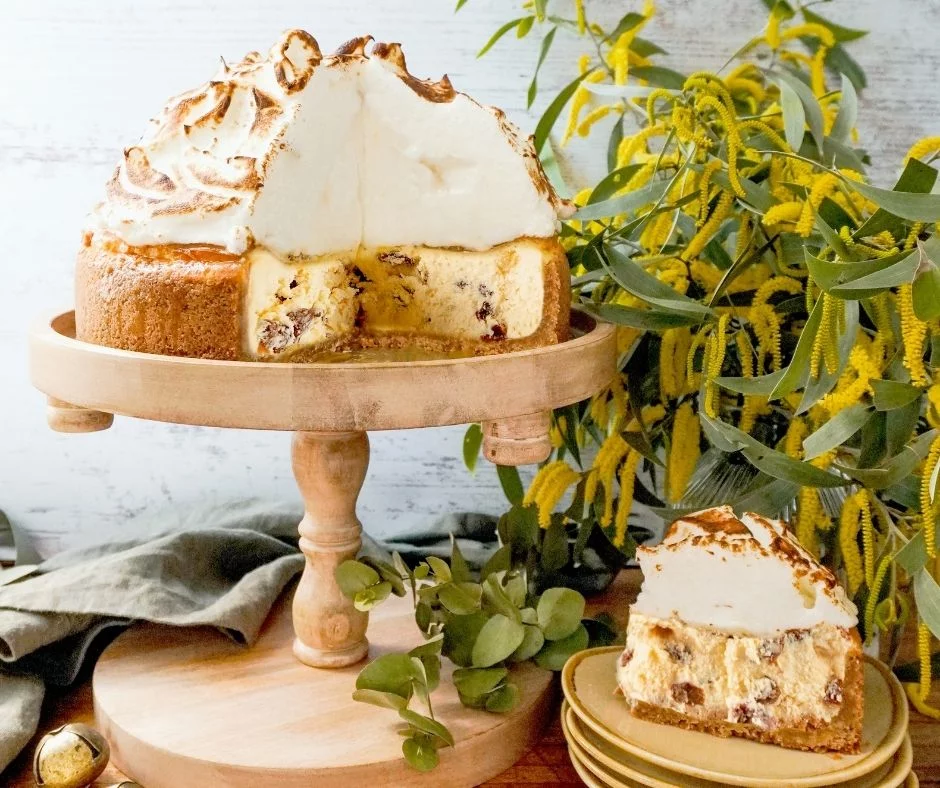
To make the meringue decoration, place the egg whites and caster sugar in a large bowl and whip into soft peaks. Spoon the meringue on top of the cheese cake and shape with a spatula. Use kitchen blow torch to lightly crisp the outside of the meringue. Serve and enjoy!
Ingredients
350g Marie biscuits (or other plain biscuits)
300g butter, melted, plus extra to grease tin
180g caster sugar
5 large eggs
500g cream cheese, room temperature
250g quark, drained, room temperature
250g sour cream, room temperature
1 tsp vanilla bean paste
50g cornflour, sifted
200g Angas Park Mixed Peel
200g Sunbeam Australian Sultanas
MERINGUE
12 egg whites
1 1⁄2 cups caster sugar
Recipe Collection

Roasted Cauliflower Steak with Cashew Cream
Preheat oven to 425°F. Set aside a baking sheet lined with parchment paper. Prepare cauliflower by trimming away any green leaves. With the cauliflower sitting on it’s stem, use a knife to slice it in half. Cut one thick slice from either side – so that you have two “steaks”, each about 1 ½” (4 cm) thick. Set cauliflower steaks aside.
Heat skillet over medium-high heat. Add 2 teaspoons olive oil, and once hot, add cauliflower steaks. Let them sear, undisturbed, for 3-3 ½ minutes on each side (cooking for approximately 6-7 minutes total). Remove once they’ve developed a golden crust on either side. While the cauliflower cooking you can assemble the harissa glaze. In a small bowl combine 2 teaspoons water, maple syrup, paprika, cumin, coriander and smoked paprika. Mix well. Once the cauliflower is seared, transfer steaks to lined baking sheet. Brush harissa glaze on both sides, coating all the nooks and crannies. Transfer to oven for 5-7 minutes or until tender.
While the cauliflower steaks are in the oven, prepare the warm chickpea salad. Add the spinach and chickpeas to a large bowl.
Squeeze lemon and drizzle avocado oil over the greens and beans. Add Himalayan sea salt and black pepper. Toss well to combine.
Assemble your dish with chickpea salad, seared cauliflower steak and drizzle with cashew cream.
Rainbow Couscous & Sultana Salad
In a small saucepan, bring water and salt just to the boil. Add couscous and stir once. Cover pan, remove from heat and set aside 10 mins, until water is absorbed.
Combine all dressing ingredients in a jar and shake well.
Fluff couscous with a fork and transfer to a large bowl. Add sultanas, chickpeas, veggies, herbs, and onions, and tosswell.
Drizzle salad with half of the dressing and toss again. Season to taste with salt and pepper if desired. Sprinkle salad withwalnuts and feta. Serve with remaining dressing.
Tips
- Store salad in a covered container in the fridge, for up to three days.
- Couscous can be substituted with cooked and cooled quinoa, if preferred
Easter Carrot & Sultana Cake
Preheat oven to 180C. Grease and line two 20cm cake tins.
In a large bowl, sift the flour, baking powder, bicarb, spices and salt. Stir to combine.
In a stand mixer, beat the eggs, sugars, oil and vanilla until smooth. Add half of the flour mix and mix on low speed until combined. Add remaining flour mix and mix on low speed again until all of the flour is incorporated. Add the pineapple and sultanas. Stir with a wooden spoon to combine.
Divide evenly between the prepared tins and bake for 40 mins or until cooked. Rotate the cakes after 20 mins. (You can test with a skewer, and the cake is ready when the skewer comes out clean.)
Cool the cakes in the pans for 10 mins, then transfer to cooling racks and leave until cooled.
Meanwhile, prepare the icing.
In a stand mixer, beat the butter on medium speed until very pale and creamy, about 4 mins. Add half of the sifted icing sugar and beat on low speed for about 1 min. Increase speed to medium to combine. Add remaining icing sugar and reduce speed to low for a further minute, then increase to medium speed for another few minutes until all of the icing sugar is combined. Add the vanilla and 1 tablespoon of the milk. Beat for 1 minute or until combined. Add extra tablespoon of milk of you would like a thinner frosting.
Divide the frosting between the centre of the cakes, reserving the remainder for the top and the sides.
Decorate with topping of choice.
Lamb Rogan Josh
- Heat half of the oil in a large frying pan, add onion, garlic and ginger, cook for 3-4 minutes until tender. Add rogan josh paste and cook a further minute until fragrant. Add to the pot of a slow cooker.
- Using the remaining oil, sear lamb in batches until well browned. Add to the slow cooker with the tomatoes and water. Cook on low heat for 8 hours. Stir in garam masala and season well.
- Serve lamb with almonds, coriander and papadums.*For a faster cooking time, cook on High heat for 4 hours.
Festive Fruit Cake
Preheat the oven to 150°C. Line the base and sides of a 20cm springform cake pan.
Mix nuts, dried fruits, glace cherries, peel in a bowl. Sift in flour, baking powder then stir in sugar. Lightly whisk eggs with vanilla, then stir into the cake mixture until well combined. Pour into pan. Bake for 1 hour 30 minutes or until a skewer inserted in the centre comes out clean.
Cool cake in the pan for 15 minutes, then turn out onto a rack over a plate and remove baking paper. Pierce all over with a skewer. Drizzle with brandy, then wrap tightly in foil and leave in a cool, dry place for 2-3 days to mature.
For the topping: Soak fruit in Maple syrup, add boiling water to cover and let soften. Closer to serving, warm jam in a pan over low heat or in the microwave until runny. Arrange the maple-soaked fruits over the top of the cake in a decorative pattern, then brush with warm jam to set in place.
Frozen Christmas Pudding
Combine sugar with 250ml water in a small saucepan. Stir over a low heat until the sugar has dissolved, then increase heat to high and boil for 1 minute.Remove from heat, add sultanas and cranberries and allow to sit for 10 mins. Drain and set aside to cool.
Use muslin to line the inside of a 1.75L capacity pudding basin.
Meanwhile, spoon icecream into the bowl of a stand mixer fitted with a beater attachment. Allow to soften slightly before beating until smooth.Add cooled fruit mixture, vanilla, cinnamon, pistachios and brandy and beat until just incorporated. Spoon into the prepared basin, smooth the surface, cover with the lid (or plastic wrap) and freeze overnight or until firm.
Turn out onto a serving plate, top with fresh berries and shower with icing sugar to serve.
You will need a 1.75L pudding basin and muslin for this recipe
You will need to begin this recipe the night before