



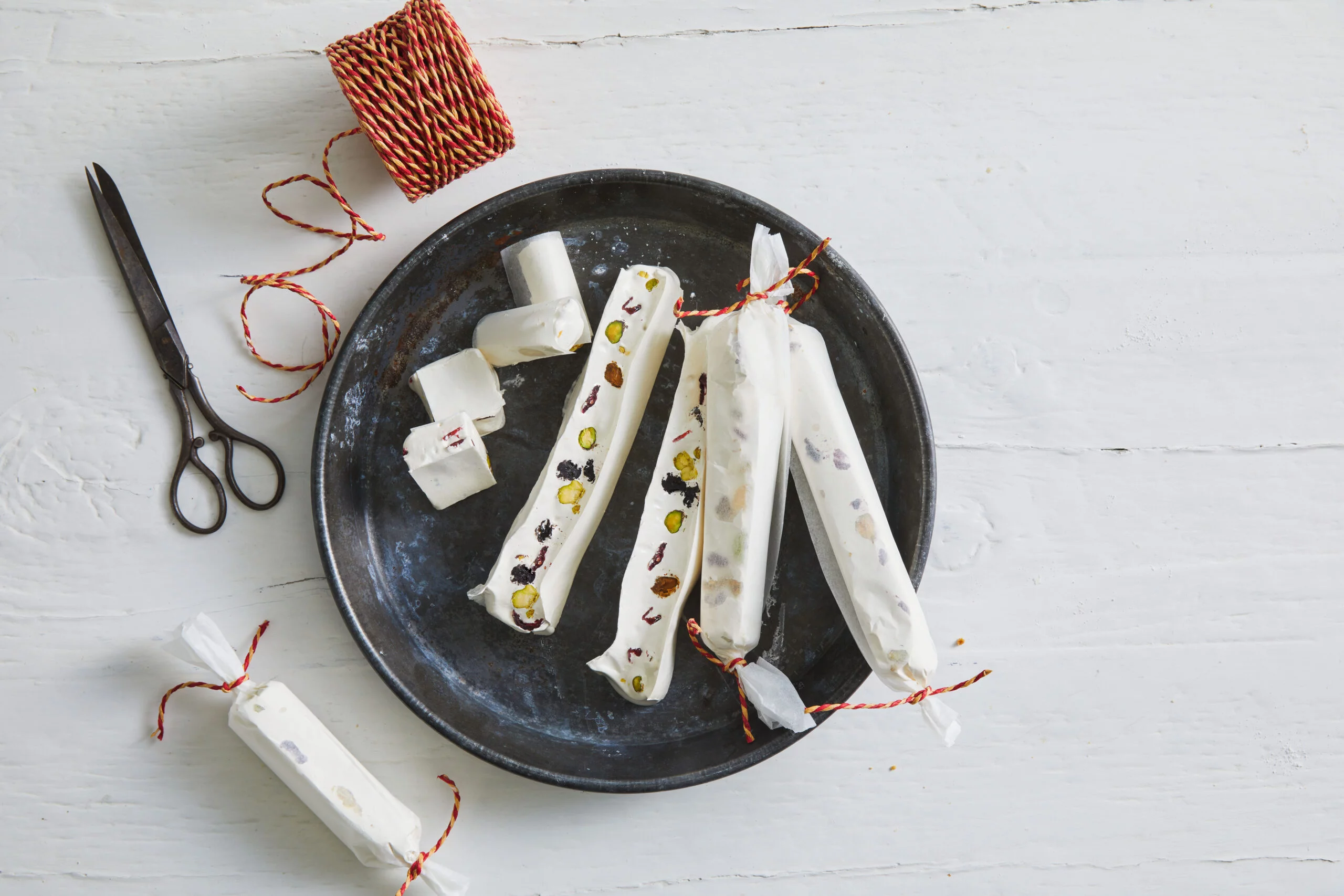
Christmas Nougat
Preparation 20 Minutes
Cook 20 Minutes
Serves 8
Method
Preheat oven to 180°C.
Lightly brush a 15cm square cake pan with oil. Line the base with 1 sheet of rice paper.2Spread pistachios over baking tray. Bake for 4-5 minutes, until toasted.
Set aside to cool.3In a medium saucepan, combine sugar, honey, glucose and water, and stir over low heat for 5-7 minutes, until sugar dissolves. Increase heat to high and boil, without stirring, for 20 minutes, occasionally brushing down sides of pan with a pastry brush dipped in water.
Remove from heat.4Meanwhile, in a clean bowl, using an electric mixer, beat egg-white and rosewater together until stiff peaks form. With the motor running, pour hot sugar syrup into the egg-white mixture in a thin, steady stream.
Using a metal spoon, stir in pistachios and cranberries. Pour into prepared pan. Press firmly into the base.
Top with the remaining rice paper sheet. Set aside in a cool, dry place for 4 hours to set.
Turn nougat onto a chopping board and cut into 3cm squares to serve.
Ingredients
2 edible rice paper sheets
1 cup pistachio kernels
1 1/3 cup caster sugar
1/4 cup honey
1/4 cup liquid glucose
2 tablespoon water
1 egg-white
2 teaspoon rosewater
1 1/4 cup dried cranberries
1/2 cup Angas Park dried blueberries
1/2 cup SUNBEAM Currants
Recipe Collection

Ricotta & Apricot Loaf with Thyme
- Pre-heat oven to 180°C (160°C fan-forced). Line the base and sides of a 10 x 20cm loaf pan.
- Combine butter, eggs and sugar in a large mixing bowl. Whisk well. Add flour and mix until just combined.
- Fold in the ricotta, apricots and thyme. Spoon into prepared pan and sprinkle the top with almonds and thyme. Bake for 45-50 minutes, or until an inserted skewer comes out clean. Allow to cool slightly before removing from the pan.
Festive Rumballs
- Place biscuits, walnuts and sultanas in a food processor, pulsing until fine crumbs have formed. Add coconut, condensed milk and cinnamon. Continue pulsing until mixture has come together. Remove to a bowl and refrigerate for at least 15 minutes.
- Roll teaspoons of chilled mixture into balls whilst enclosing half a cherry or walnut inside. Toss in extra coconut or finely chopped walnuts. Refrigerate until required.
Easy Florentines
Preheat oven to 180ºC (160ºC fan).Line 2 baking trays with baking paper.
In a large bowl, combine Corn Flakes, almonds, sultanas and cherries, mix well.Pour over the sweetened condensed milk and stir to coat.
Place an egg ring onto prepared pan.Spoon the mixture into the egg ring, filling to the top and gently pressing down to compact.Remove egg ring and repeat, with remaining mixture, 6 biscuits on each tray.
Bake biscuits for 15 mins, swapping the trays around half way.Remove from oven and allow biscuits to cool completely on trays.
Melt the chocolate and brush onto the bases of each biscuit.Rest cookies on a baking rack, chocolate side up, to allow chocolate to set.
You will need a 7.5cm egg ring for this recipe
Chocolate Puddings with Sherry Raisins
-
Pre-heat oven to 160°C (140°C fan-forced). Lightly grease 6 x ¾ cup capacity muffin pans. Place butter, sugar, raisins and sherry in a saucepan and heat, stirring occasionally until butter has melted. Allow to cool.
-
Mix eggs through raisin mixture and then fold in the flour, almond meal, cocoa and spice. Pour between prepared pans and bake for 30 minutes. Allow to cool for 10 minutes in pan before removing.
-
Use a small spatula to help remove puddings from pans and serve with custard and cream.
Puddings can be made in advance and re-heated briefly in a microwave to warm through.
Christmas Cheesecake
Preheat oven to 180oC (160oC fan). Generously grease a 20cm round, loose-bottom (or springform) tin. Line the base with baking paper.
In the bowl of a food processor, add biscuits. Blitz to a fine crumb. Add 250g of the melted butter and blitz until just combined. Spoon the mixture into the prepared tin and use a spatula to gentle push half of the mixture up the sides of the tin. Spread remaining mixture evenly over the base (using a drinking glass can help to compact the mixture around the sides and base). Refrigerate.
In the bowl of a stand mixer fitted with a whisk attachment, combine remaining butter with sugar and whisk until combined. With the motor running, add eggs one at a time until incorporated. Scrape down the sides of the bowl and add cream cheese, quark, sour cream and vanilla, whisk until smooth. Add cornflour and mix until incorporated.
Add peel and sultanas and gently fold through the cream mixture, then spoon into the prepared base and smooth the surface.
Bake cheesecake for 10mins then reduce oven temperature to 170°C (150°C fan) and bake for a further 50 mins. Turn off the oven, leaving the door slightly open, allow cheesecake to sit in the oven for a further hour until the edges of the cheesecake feel firm when gently pressed.
Allow the cheesecake to cool completely at room temperature then remove sides of tin and transfer cheesecake to refrigerator to cool overnight.
To make the meringue decoration, place the egg whites and caster sugar in a large bowl and whip into soft peaks. Spoon the meringue on top of the cheese cake and shape with a spatula. Use kitchen blow torch to lightly crisp the outside of the meringue. Serve and enjoy!
Chocolate Easter Nests
Pre-heat oven to 180°C (160°C). Place almonds on a baking tray and cook for 8 minutes or until golden. Set aside to cool.
Line a tray with baking paper which will fit into the refrigerator. Combine the almonds and sultanas in a bowl.
Place the different chocolates into 3 separate heat proof bowls. Place over a saucepan of gently simmering water and mix until melted. Add ⅓ of the almond mixture to each bowl of chocolate and mix well.
Place spoonfuls of mixture onto lined trays and shape into a nest, using the back of the spoon to make an indent in the centre. Refrigerate for approx. 1 hour until set. Decorate with small easter eggs.