



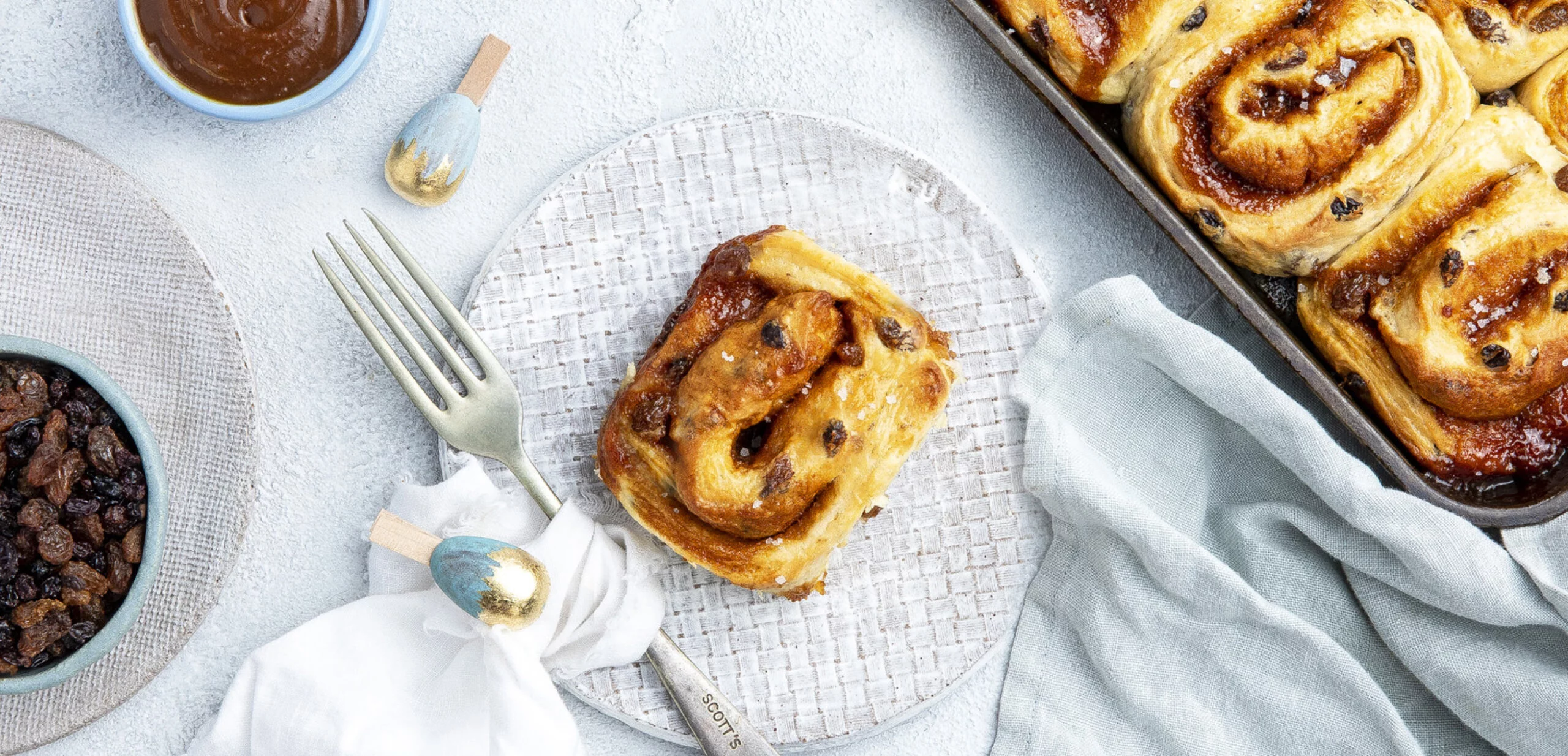
Salted Caramel Easter Scrolls
Preparation 25 Minutes
Cook 90 Minutes
Serves 12
Method
- Whisk together milk, 1 tsp caster sugar and 2 tsp yeast and set aside for 10 mins until frothy. Whisk in 2 of the eggs.
- Combine remaining sugar and flour in a large bowl, using a whisk to beat. Add yeast/eggs mixture and use a wooden spoon to stir until the mixture just comes together, then turn out onto a lightly floured surface and slowly incorporate the butter while kneading the dough. Once all the butter has been incorporated, add the sultanas and currants and continue to knead for a further 3-4 mins or until the dough is smooth and elastic.
- Grease a large bowl with extra butter, then place dough inside, brush with a little extra melted butter then cover with a clean tea towel and place somewhere warm to prove for 1 hour (or until doubled in size).
- Meanwhile, to make salted caramel, add sugar to a medium, heavy-based saucepan. Stir constantly until sugar has completely dissolved then remove from heat, whisk in butter (be careful as it will spit) then pour in thickened cream in a slow, steady stream, whisking constantly. Whisk in salt then set aside and allow to cool.
- Preheat oven to 180ºC (160ºC fan).
- Once dough has risen, lightly dust a work surface with flour and roll dough out to a 30x40cm rectangle shape with the long side facing you. Spread half the salted caramel over the top (leave a 2cm border around each edge), then roll the long side up into a tight scroll.
- Cut the scroll into 12 even, smaller rolls then arrange closely in a greased 18x22cm rectangular tin. Whisk remaining egg with a splash of water and brush over the rolls, then bake for 20-25 mins (you may need to cover with foil after 10 mins if your rolls are browning too quickly) until golden and the rolls sound hollow when tapped. Serve warm from the oven with extra salted caramel.
Ingredients
125ml warm (not hot) milk
55g (1/4 cup) caster sugar
2 tsp dried yeast
3 eggs
375g (2 ½ cups) bread flour, plus extra to dust surfaces
120g butter, cubed, room temperature, plus extra to grease bowl
120g Sunbeam Sultanas
40g Sunbeam Currants
Salted Caramel Sauce
260g caster sugar
90g butter, cubed
125ml thickened cream
1 tsp sea salt
Recipe Collection

Pine nut, Sultana & Maple Tart
Place the maple syrup, sugar, and salt in a medium saucepan and stir to combine them. Add the butter, place the saucepan over med-high heat, and bring mixture to a boil, stirring often. Remove the saucepan from the heat and transfer the mixture to a large mixing bowl; add the sultanas & allow it to cool for 20 minutes. Whisk in heavy cream, followed by the egg and egg yolk.
Preheat the oven to 180 Degrees.
Place the tart shell on a baking sheet to catch any drips. Distribute the pine nuts evenly over the bottom of the tart shell and pour the custard into the shell until it reaches the top of the crust. Bake for 30-45 minutes, or until both the crust and the filling have turned light golden brown and the custard is set but still jiggly.
Serve the tart while still slightly warm, or cool it and serve at room temperature. Leftovers will keep, wrapped in plastic, for a few days in the refrigerator.
Carrot & Sultana Cake
Preheat oven to 180C. Grease and line two 20cm cake tins.
In a large bowl, sift the flour, baking powder, bicarb, spices and salt. Stir to combine.
In a stand mixer, beat the eggs, sugars, oil and vanilla until smooth. Add half of the flour mix and mix on low speed until combined. Add remaining flour mix and mix on low speed again until all of the flour is incorporated. Add the pineapple and sultanas. Stir with a wooden spoon to combine.
Divide evenly between the prepared tins and bake for 40 mins or until cooked. Rotate the cakes after 20 mins. (You can test with a skewer, and the cake is ready when the skewer comes out clean.)
Cool the cakes in the pans for 10 mins, then transfer to cooling racks and leave until cooled.
Meanwhile, prepare the icing.
In a stand mixer, beat the butter on medium speed until very pale and creamy, about 4 mins. Add half of the sifted icing sugar and beat on low speed for about 1 min. Increase speed to medium to combine. Add remaining icing sugar and reduce speed to low for a further minute, then increase to medium speed for another few minutes until all of the icing sugar is combined. Add the vanilla and 1 tablespoon of the milk. Beat for 1 minute or until combined. Add extra tablespoon of milk of you would like a thinner frosting.
Divide the frosting between the centre of the cakes, reserving the remainder for the top and the sides.
Decorate with topping of choice.
Salted Caramel Easter Scrolls
- Whisk together milk, 1 tsp caster sugar and 2 tsp yeast and set aside for 10 mins until frothy. Whisk in 2 of the eggs.
- Combine remaining sugar and flour in a large bowl, using a whisk to beat. Add yeast/eggs mixture and use a wooden spoon to stir until the mixture just comes together, then turn out onto a lightly floured surface and slowly incorporate the butter while kneading the dough. Once all the butter has been incorporated, add the sultanas and currants and continue to knead for a further 3-4 mins or until the dough is smooth and elastic.
- Grease a large bowl with extra butter, then place dough inside, brush with a little extra melted butter then cover with a clean tea towel and place somewhere warm to prove for 1 hour (or until doubled in size).
- Meanwhile, to make salted caramel, add sugar to a medium, heavy-based saucepan. Stir constantly until sugar has completely dissolved then remove from heat, whisk in butter (be careful as it will spit) then pour in thickened cream in a slow, steady stream, whisking constantly. Whisk in salt then set aside and allow to cool.
- Preheat oven to 180ºC (160ºC fan).
- Once dough has risen, lightly dust a work surface with flour and roll dough out to a 30x40cm rectangle shape with the long side facing you. Spread half the salted caramel over the top (leave a 2cm border around each edge), then roll the long side up into a tight scroll.
- Cut the scroll into 12 even, smaller rolls then arrange closely in a greased 18x22cm rectangular tin. Whisk remaining egg with a splash of water and brush over the rolls, then bake for 20-25 mins (you may need to cover with foil after 10 mins if your rolls are browning too quickly) until golden and the rolls sound hollow when tapped. Serve warm from the oven with extra salted caramel.
Smoked Eggplant Dip
Pre-heat oven to 180°C (160°C fan-forced).
- Prick eggplant all over with a fork. Place both eggplants over a low gas flame on your cooktop, turning often until skin is charred all over. Remove to a lined baking tray and continue cooking in the oven for 30 minutes or until completely tender and cooked through.
- When cool, peel skin away from eggplants, discarding stems and juices.
- Roughly chop the flesh and combine with yoghurt, lemon juice, tahini, garlic and seasonings.
- Combine currants with sherry vinegar and set aside for 10 minutes.
- For serving, toss together the drained currants, pine nuts, parsley and seasonings. Spoon eggplant dip into a serving dish and sprinkle with pine nut mixture. Drizzle with extra virgin olive oil and serve with warmed turkish bread.
Christmas Cheesecake
Preheat oven to 180oC (160oC fan). Generously grease a 20cm round, loose-bottom (or springform) tin. Line the base with baking paper.
In the bowl of a food processor, add biscuits. Blitz to a fine crumb. Add 250g of the melted butter and blitz until just combined. Spoon the mixture into the prepared tin and use a spatula to gentle push half of the mixture up the sides of the tin. Spread remaining mixture evenly over the base (using a drinking glass can help to compact the mixture around the sides and base). Refrigerate.
In the bowl of a stand mixer fitted with a whisk attachment, combine remaining butter with sugar and whisk until combined. With the motor running, add eggs one at a time until incorporated. Scrape down the sides of the bowl and add cream cheese, quark, sour cream and vanilla, whisk until smooth. Add cornflour and mix until incorporated.
Add peel and sultanas and gently fold through the cream mixture, then spoon into the prepared base and smooth the surface.
Bake cheesecake for 10mins then reduce oven temperature to 170°C (150°C fan) and bake for a further 50 mins. Turn off the oven, leaving the door slightly open, allow cheesecake to sit in the oven for a further hour until the edges of the cheesecake feel firm when gently pressed.
Allow the cheesecake to cool completely at room temperature then remove sides of tin and transfer cheesecake to refrigerator to cool overnight.
To make the meringue decoration, place the egg whites and caster sugar in a large bowl and whip into soft peaks. Spoon the meringue on top of the cheese cake and shape with a spatula. Use kitchen blow torch to lightly crisp the outside of the meringue. Serve and enjoy!
Mini Easter Panettone
In a medium bowl, whisk together the eggs, yolk and vanilla.
In a separate large bowl, combine the flour, yeast, sugar and salt. Pour in the warm milk, then add the egg mixture. Stir well to combine until a dough forms. Cover with cling film, sprayed with oil, and set aside to rest in a warm place for approx. 1 hour or until doubled in size.
Place 12 cardboard patty cases on a baking tray. Alternatively, place regular cases into a muffin tin. Set aside.
Stir in the butter, sultanas and mixed fruit. Mix until combined.
Divide the dough into 12 equal pieces and put into prepared cases.
Cover again and let rise for a further ½ hour.
Brush the tops with milk and bake for 25 mins or until cooked through and golden.
Cool on tray.
Meanwhile, make the icing.
In a small bowl, place the icing sugar and 1 tablespoon of water. Mix until a paste forms. Add small amounts of water until desired consistency. Add a few drops of food colouring to make a pale pink icing.
Drizzle over cooled cakes and sprinkle with dried rose petal leaves or your choice of sprinkles.