



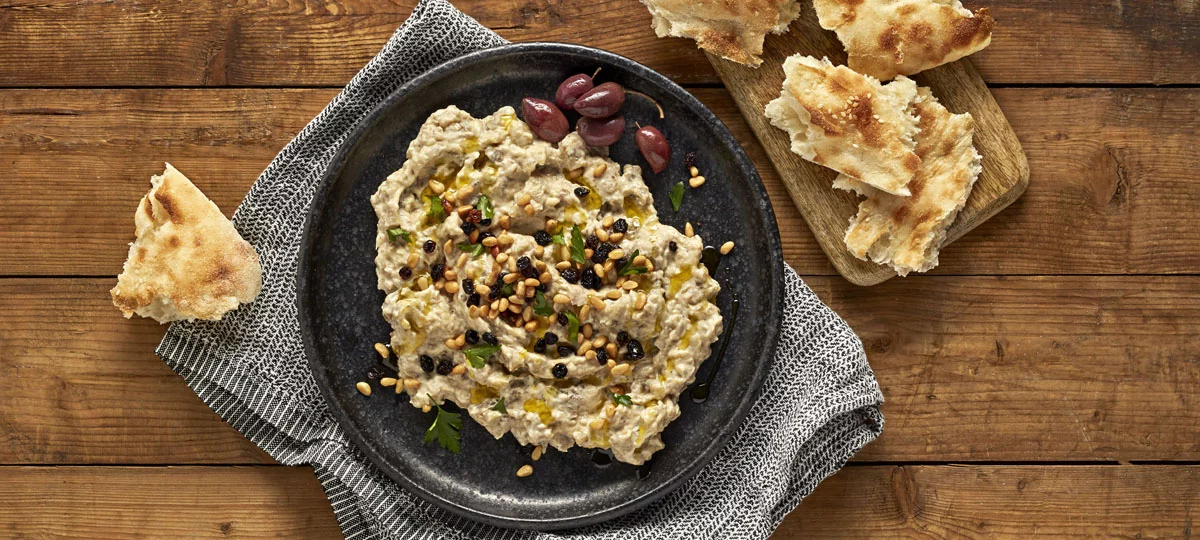
Smoked Eggplant Dip
Preparation 15 Minutes
Cook 40 Minutes
Serves 6
Method
Pre-heat oven to 180°C (160°C fan-forced).
- Prick eggplant all over with a fork. Place both eggplants over a low gas flame on your cooktop, turning often until skin is charred all over. Remove to a lined baking tray and continue cooking in the oven for 30 minutes or until completely tender and cooked through.
- When cool, peel skin away from eggplants, discarding stems and juices.
- Roughly chop the flesh and combine with yoghurt, lemon juice, tahini, garlic and seasonings.
- Combine currants with sherry vinegar and set aside for 10 minutes.
- For serving, toss together the drained currants, pine nuts, parsley and seasonings. Spoon eggplant dip into a serving dish and sprinkle with pine nut mixture. Drizzle with extra virgin olive oil and serve with warmed turkish bread.
Ingredients
2 large eggplant
1/4 cup natural yoghurt
Juice of 1/2 lemon
1 tbsp tahini
1/2 clove garlic, finely chopped
Salt flakes and freshly ground black pepper
2 tsp SUNBEAM Currants
1 tsp sherry vinegar
1 tbsp SUNBEAM Pine Nuts, toasted
1/4 cup flat leaf parsley leaves, chopped
Recipe Collection

Chocolate Puddings with Sherry Raisins
-
Pre-heat oven to 160°C (140°C fan-forced). Lightly grease 6 x ¾ cup capacity muffin pans. Place butter, sugar, raisins and sherry in a saucepan and heat, stirring occasionally until butter has melted. Allow to cool.
-
Mix eggs through raisin mixture and then fold in the flour, almond meal, cocoa and spice. Pour between prepared pans and bake for 30 minutes. Allow to cool for 10 minutes in pan before removing.
-
Use a small spatula to help remove puddings from pans and serve with custard and cream.
Puddings can be made in advance and re-heated briefly in a microwave to warm through.
Self-Saucing Chocolate Pudding
- Pre-heat oven to 180°C (160°C fan-forced). Lightly grease a 4 cup capacity baking dish.
- Combine flour, almond meal, sugar and cocoa in a large mixing bowl.
- In a separate bowl, whisk together the butter, eggs and milk. Add to the dry ingredients with the raisins and mix well. Spoon into baking dish.
- For the sauce, combine the water, sugar and cocoa. Pour over the batter in the baking dish and bake for 30-35 minutes until cake is cooked. Serve warm with ice-cream, cream or custard.
Nutty Barramundi with Coconut Greens
- Preheat oven to 200°C/400°F. Line an oven tray with baking paper.
- Place macadamia nuts, almonds, ginger and rind in a food processor; pulse until mixture forms a chunky paste.
- Place fillets on an oven tray; season with salt and pepper.
- Press nut mixture evenly on each fillet.
- Bake fish for 10 minutes or until the crust is golden brown.
- Meanwhile, place sugar snap peas and beans in boiling water for 3 minutes. Drain well; refresh under cold running water.
- Combine all coconut ingredients in a small jar. Shake.
- Serve fillets topped with micro herbs and dressing, sugar snap peas and beans.
White Christmas Tree Bites
- Line the inside of 12 ice-cream cones with baking paper, using a stapler or sticky tape to secure paper.
- Place white chocolate in a bowl over a saucepan of simmering water (ensuring bottom of the bowl doesn’t touch the water) and stir until the chocolate has melted and is smooth. Remove from heat.
- Allow to cool then add all the other ingredients and stir to coat. Spoon into the prepared lined cones Refrigerate for at least 2 hours to set before serving.
Festive Rumballs
- Place biscuits, walnuts and sultanas in a food processor, pulsing until fine crumbs have formed. Add coconut, condensed milk and cinnamon. Continue pulsing until mixture has come together. Remove to a bowl and refrigerate for at least 15 minutes.
- Roll teaspoons of chilled mixture into balls whilst enclosing half a cherry or walnut inside. Toss in extra coconut or finely chopped walnuts. Refrigerate until required.
Ricotta & Apricot Loaf with Thyme
- Pre-heat oven to 180°C (160°C fan-forced). Line the base and sides of a 10 x 20cm loaf pan.
- Combine butter, eggs and sugar in a large mixing bowl. Whisk well. Add flour and mix until just combined.
- Fold in the ricotta, apricots and thyme. Spoon into prepared pan and sprinkle the top with almonds and thyme. Bake for 45-50 minutes, or until an inserted skewer comes out clean. Allow to cool slightly before removing from the pan.